Psycho-emotional impact on oncology staff in Abidjan (Côte d'Ivoire): a cross-sectional study
Pétiori G Laurence Touré1, Stéphane Ipou2, Ismael Kamara3, Brahim Samuel Traoré2, Bitty Adde Odo1, Dion Aristide Gonce2, Malan N’Guessan Prosper Mebiala1, Gnonsian Estelle Gahie2, Etobo Innocent Ahounou2, Aka Rita2, Kouamé Konan Yvon Kouassi1, Moctar Touré1, Innocent Adoubi1, Gustave Koffi3, Jean Marie Yeo Tenena1,2 and Roger Charles Joseph Delafosse2
1 Faculty of Medical Sciences, Felix Houphouët-Boigny University of Abidjan/Treichville University Hospital of Abidjan, Côte d’Ivoire, West Africa
2 Faculty of Medical Sciences, Felix Houphouët-Boigny University of Abidjan/National Institute of Public Health of Abidjan, Côte d’Ivoire, West Africa
3 Faculty of Medical Sciences, Felix Houphouët-Boigny University of Abidjan/Yopougon University Hospital of Abidjan, Côte d’Ivoire, West Africa
Abstract
Background: The mental health of oncology staff is often impacted by the suffering of patients, in the face of which they frequently feel powerless. The objective of this study was to examine the psycho-emotional experiences of medical and paramedical staff in the oncology and onco-hematology departments of the Treichville and Yopougon University Hospitals.
Methods: We conducted a prospective, descriptive, bicentric study from January 2021 to May 2022 involving 73 healthcare workers recruited through exhaustive sampling. The Hamilton Anxiety Rating Scale was used to assess anxiety among the participants.
Results: Our results revealed that nearly three-quarters of the study participants (73%) had between 1 and 5 years of professional experience and were mostly physicians (72%) or nurses (25%). Symptoms of psychological trauma were observed, particularly avoidance behaviours (46%) and traumatic re-experiencing (46%). A consistently sad mood was reported by 71% of the caregivers. Frequent psychosomatic complaints such as headaches (42%) and epigastric pain (35%) were also noted. Severe anxiety was found in 29% of participants. A shift in personal values was observed, including an increase in religious practices, which rose from 19% to 30%. Finally, 72% of caregivers expressed a desire for psycho-oncological support.
Conclusion: Healthcare personnel in onco-hematology, who care for seriously ill patients often nearing the end of life, are regularly affected on a psycho-emotional level, highlighting the need to establish dedicated psycho-emotional support for this workforce.
Keywords: cancer – psycho-oncology – psycho-emotional experience – healthcare workers – Abidjan
Correspondence to: Pétiori G Laurence Touré
Email: ptikeur2486@gmail.com
Published: 03/02/2026
Received: 28/05/2025
Publication costs for this article were supported by ecancer (UK Charity number 1176307).
Copyright: © the authors; licensee ecancermedicalscience. This is an Open Access article distributed under the terms of the Creative Commons Attribution License (http://creativecommons.org/licenses/by/4.0), which permits unrestricted use, distribution, and reproduction in any medium, provided the original work is properly cited.
Introduction
The scope of healthcare professionals’ roles in oncology, once focused primarily on end-of-life care, has progressively expanded to include rehabilitation and reintegration of cancer patients. Nevertheless, in the collective imagination, cancer is still often perceived as an incurable disease, inexorably associated with death [1].
Cancer affects not only the individual diagnosed but also profoundly disrupts the family and close relatives, who are confronted with fear, sadness and the alternation of hope and despair [2, 3]. While it was once assumed that healthcare workers were equipped to face their patients’ suffering, the reality in oncology reveals a complex context, characterized by constant stress and daily ethical dilemmas [4]. Several studies have highlighted the psychological impact of such exposure: Lee et al [5] reported that oncology nurses experience significant difficulties in coping with the psychological burden of patient death, an experience that influences their end-of-life care practices both negatively and positively. Another study showed that healthcare workers, particularly physicians, may experience intense emotional reactions likely to affect their clinical behaviour, the quality of care delivered, as well as their personal lives [6].
In Côte d’Ivoire, this situation is compounded by the lack of infrastructure and specialized psycho-oncology services, which limit the availability of institutionalized psychological support for healthcare providers. In this context, the mental health of oncology and hematology staff, confronted daily with patient suffering and death, remains a pressing yet underexplored issue.
We therefore conducted this study to explore the psycho-emotional experiences of healthcare personnel working in oncology and hematology departments in Abidjan.
Methodology
This was a prospective, cross-sectional, bicentric descriptive study conducted in the Oncology Department of Treichville University Hospital and the Hematology Department of Yopougon University Hospital. These departments provide care for patients with hematologic (blood) cancers in the hematology unit and other types of cancer in the oncology unit.
The study was conducted from 1 January 2021, to 31 May 2022 (17 months). We included all healthcare personnel working in these two departments, regardless of their profession (physicians, nurses, nurse assistants, psychologists), with a minimum of 6 months of experience, who were actively on duty at the time of the survey and who gave informed consent to participate. Exclusion criteria were as follows: healthcare workers on medical leave, maternity leave or any other type of leave at the time of the study. Personnel with less than 6 months of professional experience, those who declined to participate and administrative staff in these departments were also excluded.
Sampling was conducted through exhaustive recruitment, meaning that all eligible participants present at the time of data collection were included, without random selection or drawing. Data were collected using a standardized survey form completed during a face-to-face interview with each participant. The Hamilton Anxiety Rating Scale (HAM-A) was used to assess anxiety.
Data were coded and entered in Excel, then transferred to SPSS version 21 for analysis.
Only descriptive statistics were applied, including frequencies, percentages, measures of central tendency and dispersion (mean and standard deviation). Inferential statistics were not used, as the study design was primarily descriptive and exploratory, with a relatively small sample size that did not allow for robust hypothesis testing.
Authorization to conduct the study was obtained from the management of the university hospitals. Participation was voluntary and based on informed consent. Each participant was informed in advance about the study’s objectives, the confidentiality of the data collected and the voluntary nature of their participation, including the right to withdraw at any time without justification, even after initially consenting. Participant anonymity and the confidentiality of all collected data were strictly maintained throughout the study.
Results
A total of 73 participants met our inclusion criteria.
Sociodemographic characteristics
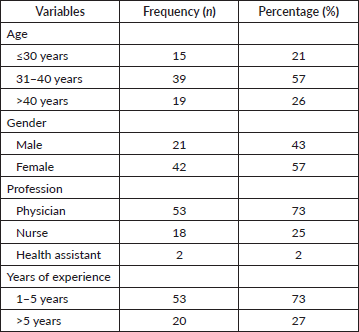
The average age of participants was 32.7 years (±5) and 64% were male. Physicians represented 72% of the sample and 73% had 1–5 years of professional experience. A summary of the sociodemographic characteristics is provided in Table 1.
Table 1. Sociodemographic characteristics of healthcare workers.
Psycho-emotional characteristics
Sadness was reported by 71% of participants, and 87% felt helplessness when caring for end-of-life patients. Trauma-related symptoms included avoidance behaviours (46%), re-experiencing (46%) and nervousness (36%). Somatic symptoms were common: headaches (42%) and epigastric pain (35%), most occurring during work hours (68%). Anxiety assessed via HAM-A showed pathological or abnormal levels in 41%, with 29% severe (Table 2).
Value shifts
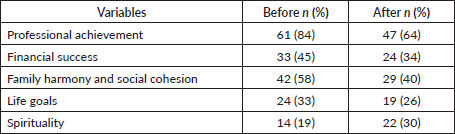
Before working in oncology, professional success was the top priority (84%), followed by family success (58%) and financial success (45%). Since beginning in cancer care, emphasis decreased on professional success (64%), family harmony (40%) and financial success (34%), while 30% reported increased religious practice (Table 3).
Most participants (72%) expressed a need for psycho-oncological support.
Discussion
This study provides valuable insight into the psycho-emotional experiences of healthcare personnel working in oncology and hematology at the Treichville and Yopougon University Hospitals in Côte d’Ivoire. It highlights a significant prevalence of psychological distress among caregivers in these settings.
However, several limitations should be acknowledged. First, the cross-sectional design and relatively small sample size (n = 73) limited the analysis to descriptive statistics and prevented causal inference. The study, therefore, aimed to provide an initial situational overview to guide future research using larger and more analytically robust designs. Second, the use of face-to-face interviews may have introduced social desirability bias, potentially leading to an underestimation of anxiety levels. Finally, the relatively small sample size limits the generalizability of the findings to all healthcare workers involved in cancer care.
Despite these limitations, this study is among the first of its kind in the Ivorian oncology context and provides a foundation for future research, particularly larger-scale longitudinal or qualitative studies.
Sociodemographic profile
The average age in our study is comparable to that reported by Lee et al [5], suggesting that many healthcare workers are in the early middle stages of their careers, with professional experience still developing. However, we observed a female predominance, a trend also confirmed by Guariglia et al [4].
Table 2. Characteristics of the psycho-emotional experience of healthcare workers.
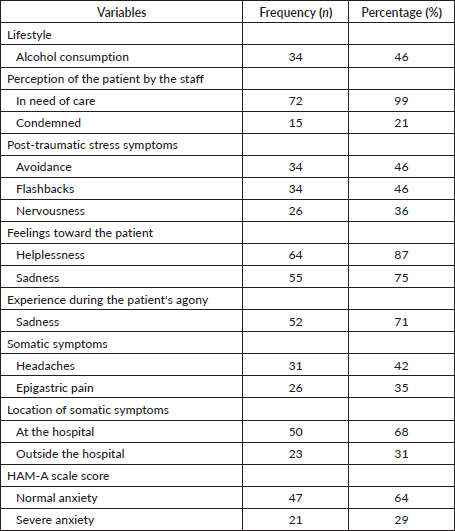
Table 3. Characteristics related to value shifts among participants before and after working in oncology.
While we observed a predominance of physicians (72%), other studies often report a greater representation of nursing staff [7, 8]. Nurses typically have more sustained contact with patients and may therefore be more vulnerable to emotional strain. In our context, the predominance of physicians may be because these departments serve as regional training centers for young specialists, and due to the underrepresentation of paramedical professionals in the national oncology workforce.
Psycho-emotional experiences
Healthcare workers, through their close and daily interactions with patients, inevitably share in their psychological and emotional experiences. In our study, nearly half of the participants (46%) exhibited signs of post-traumatic stress disorder, including avoidance behaviours toward certain patients with particularly distressing clinical presentations, as well as the re-experiencing of patient images, scenes of agony or extreme suffering (46%). According to Phaneuf [9], throughout the caregiving process, healthcare professionals often develop emotional attachment to their patients, rooted in their humanity and vulnerability. This emotional closeness exposes them to a high risk of compassion fatigue, defined as a debilitating exhaustion resulting from repeated empathic responses to the pain and suffering of others, and often associated with burnout and vicarious trauma [9]. Several factors likely contribute to this emotional exhaustion, including difficulties in managing daily stress across all stages of cancer care, starting with the diagnosis, through relapses and recurrences and up to end-of-life support [10]. This is supported by a Moroccan study among oncology professionals, which reported high rates of emotional exhaustion (81.4%) and depersonalization (79.7%) [11]. Similarly, the study by Duarte and Pinto-Gouveia [12] emphasized the key role of psychological factors in the development of burnout (29%) and compassion fatigue (18%) among oncology nurses. It highlighted how prolonged exposure to patient suffering, combined with intense emotional involvement, can lead to significant psychological imbalance, especially when coping mechanisms are inadequate. Moreover, the bitterness of witnessing patients' lives slip away, and the inevitable sadness of failing in what they perceive as their core mission (healing and preserving life), can give rise to feelings of guilt, helplessness in the face of cancer and even self-doubt regarding their clinical competence. In our study, more than three-quarters of caregivers expressed a sense of helplessness and 71% reported feelings of sadness when facing a patient's death or agony. These findings are consistent with those from other settings. For example, Austin et al [13] found that healthcare workers often experience high levels of emotional distress when compelled to provide care perceived as ineffective.
In cancer care, caregivers often identify with their patients as a means to deliver high-quality care. However, this identification can foster emotional attachment, explaining why they are often deeply affected by a patient’s death [7]. For some healthcare professionals, cancer care becomes a constraint that challenges their professional positioning [14]. Oncologists, in particular, express frustration over their inability to fully manage their patients' care in the face of therapeutic failure. This sense of helplessness often leads to resignation and is accompanied by feelings of guilt [10].
Anxiety and somatic symptoms
Added to this is the inherent complexity of working in oncology units, especially when supporting patients in distress or severe pain. Such conditions cause physical exhaustion that quickly escalates into psychological overload, resulting in intense emotional stress that can develop into pathological anxiety [15]. This may help explain the relatively high proportion of caregivers in our study presenting with severe or pathological anxiety (29%), which inevitably impacts work organization and the quality of care provided. This situation has also been documented in Spain, where a study among oncology nurses reported that 20% experienced burnout and 37% secondary traumatic stress due to constant exposure to patient suffering. These disorders were associated with high levels of both state and trait anxiety, contributing to demotivation, the desire to leave the unit and even to exit the profession altogether [16]. Furthermore, Lissandre et al [17] demonstrated that emotional exhaustion contributes to a decline in the quality of life of healthcare professionals in oncology and hematology, due to ineffective workload management and communication difficulties.
Most caregivers in our study reported somatic symptoms, primarily headaches (42%) and epigastric pain (35%), with 68% indicating these symptoms occurred predominantly in the workplace. These manifestations are often part of a broader context of emotional stress and represent physical expressions of anxiety, which can take many forms. Our findings are consistent with literature linking emotional exhaustion to various somatic symptoms, including general malaise, gastrointestinal issues, headaches, chronic fatigue, respiratory difficulties and even serious injuries and increased mortality risk before the age of 45 [18]. This confirms that emotional distress in oncology extends beyond psychological suffering, manifesting physically as well.
Value shifts and coping strategies
Before their engagement in oncology, the dominant values among our respondents were professional achievement (84%) and family harmony (58%). However, these priorities have declined since they began practicing in this field, now concerning only 64% and 40% respectively, in favour of a stronger emphasis on spirituality, with faith increasing from 19% to 30%. This shift appears to be linked to repeated exposure to suffering, death and the limits of medicine. Faced with a sense of therapeutic helplessness, caregivers find in faith a psychological and spiritual resource that helps them give meaning to end-of-life care, better manage stress and ease the emotional burden of repeated patient deaths. Spiritual realignment thus emerges as both a protective psychological mechanism and a factor of resilience in a particularly demanding professional environment. Rushton et al [19] confirm this dynamic by showing that spiritual support strengthens caregivers’ resilience in high-intensity contexts, while reducing emotional exhaustion and depersonalization. Similarly, a Spanish study reported that oncology professionals resort to spirituality as a coping strategy to deal with the emotional demands of daily practice and the persistent suffering of patients [20].
Support needs and implications
Finally, 72% of respondents expressed a need for psychological support. In this regard, support groups appear to be a relevant intervention, having demonstrated their effectiveness in improving the psychological well-being of healthcare professionals [21]. Vanbockstael et al [15], in their study on burnout among medical residents, also highlighted the value of peer discussion groups, which allow participants to share experiences, gain perspective and better cope with the stress of caring for suffering cancer patients.
Implications for policy and practice
In resource-limited settings such as Côte d’Ivoire, where psycho-oncology infrastructure remains scarce, these findings highlight the urgency of integrating caregiver mental health into oncology services. Practical measures include implementing structured support groups, offering systematic training in stress and emotion management and creating referral pathways for specialized mental health care. At the policy level, investments in psycho-oncology units and caregiver well-being programs would strengthen resilience among staff and ultimately improve the quality of cancer care.
Conclusion
Healthcare workers in oncology and hematology face heavy emotional demands, with frequent manifestations of sadness, helplessness, anxiety and somatization, particularly among younger physicians. These experiences are often accompanied by shifts in personal values, including decreased emphasis on professional and social success and increased reliance on spirituality as a coping mechanism.
Beyond individual consequences, these findings underline the importance of institutional and policy-level initiatives to protect caregivers’ mental health and sustain the quality of cancer care. Future research should build on this work with larger, more diverse samples and analytical designs to better identify risk and resilience factors.
Acknowledgments
We extend our sincere thanks to all the staff of the Medical Oncology and Hematology departments at the University Hospitals of Treichville and Yopougon. We would like to acknowledge the use of ChatGPT (OpenAI) and Grammarly as a linguistic support tool, which helped improve the clarity and precision of the English translation of this work.
Conflicts of interest
The authors declare that they have no conflicts of interest.
Funding
This research received no specific grant from any funding agency in the public, commercial or not-for-profit sectors.
Data availability
The data utilized in this study can be provided by the authors upon request.
References
1. Razavi D and Delvaux N (2008) Précis de psycho-oncologie de l’adulte (Paris: Elsevier-Masson)
2. Touré PGL, Kamara I, and Traoré S, et al (2022) Perception de l’annonce du diagnostic de cancer dans un cadre hospitalo-universitaire en Côte d’Ivoire. À propos de 120 patients suivis dans les services d’oncologie et d’onco-hématologie Bull Cancer (Paris) 109 679–684 https://doi.org/10.1016/j.bulcan.2021.08.014
3. Borrescio-Higa F and Valdés N (2022) The psychosocial burden of families with childhood blood cancer Int J Environ Res Public Health 19 599 https://doi.org/10.3390/ijerph19010599 PMID: 35010854 PMCID: 8744617
4. Guariglia L, Terrenato I, and Iacorossi L, et al (2023) Moral distress in oncology: a descriptive study of healthcare professionals Int J Environ Res Public Health 20 5560 https://doi.org/10.3390/ijerph20085560 PMID: 37107841 PMCID: 10139085
5. Lee M, Choe K, and Kim S, et al (2023) How do oncology nurses cope with the psychological burden of caring for dying patients? Cancer Nurs 46 E245–E252 https://doi.org/10.1097/NCC.0000000000001102
6. Hubik DJ, O’Callaghan C, and Dwyer J (2021) Strong emotional reactions for doctors working in palliative care: causes, management and impact. A qualitative study Psychooncology 30 1582–1589 https://doi.org/10.1002/pon.5731 PMID: 33999514
7. Rexand-Galais F, Urban T, and Vollot P, et al (2020) Féminisation de la patientèle en oncologie thoracique et vécu des soignantes: recherche exploratoire Rev Mal Respir 37 123–133 https://doi.org/10.1016/j.rmr.2019.11.652 PMID: 32044195
8. Machavoine JL (2015) L’épuisement professionnel des médecins et des soignants en cancérologie Psycho-Oncol 9 9–13 https://doi.org/10.1007/s11839-015-0497-3
9. Phaneuf M (2014) Le vecu de la soignante devant la mort (Amsterdam: Studocu) [https://www.studocu.com/row/document/institut-superieur-des-professions-infirmieres-et-des-techniques-de-sante/droit-et-ethique-professionnelle/le-vecu-de-la-soignante-devant-la-mort/113047331] Date accessed: 27/05/25
10. Renard O, Couillet A, and Bourcelot S, et al (2022) Vécu chez les oncologues médicaux de l’annonce du transfert en unité de soins palliatifs à l’un de leurs patients Bull Cancer (Paris) 109 938–947 https://doi.org/10.1016/j.bulcan.2022.02.012
11. Benhaddouch Y, Khalfi S, and Benmaamar S, et al (2022) Burnout among physicians and caregivers in oncology: the Moroccan experience Ecancermedicalscience 16 1473 https://doi.org/10.3332/ecancer.2022.1473
12. Duarte J and Pinto-Gouveia J (2017) The role of psychological factors in oncology nurses’ burnout and compassion fatigue symptoms Eur J Oncol Nurs Off J Eur Oncol Nurs Soc 28 114–121 https://doi.org/10.1016/j.ejon.2017.04.002
13. Austin CL, Saylor R, and Finley PJ (2017) Moral distress in physicians and nurses: impact on professional quality of life and turnover Psychol Trauma Theory Res Pract Policy 9 399–406 https://doi.org/10.1037/tra0000201
14. Borteyrou X, Truchot D, and Rascle N (2014) Le stress chez le personnel travaillant en oncologie : une tentative de classification des stratégies de coping Psychol Trav Organ 15 380–398
15. Vanbockstael J, Noal S, and Degrendel-Courtecuisse AC, et al (2010) Burnout des internes en oncologie: un an d’expérience du groupe de parole de l’Association des jeunes oncologues bas-normands Bull Cancer (Paris) 97 491–492 https://doi.org/10.1684/bdc.2010.1095
16. Arimon-Pagès E, Torres-Puig-Gros J, and Fernández-Ortega P, et al (2019) Emotional impact and compassion fatigue in oncology nurses: results of a multicentre study Eur J Oncol Nurs Off J Eur Oncol Nurs Soc 43 101666 https://doi.org/10.1016/j.ejon.2019.09.007
17. Lissandre S, Abbey-Huguenin H, and Bonnin-Scaon S, et al (2008) Facteurs associés au burnout chez les soignants en oncohématologie Oncologie 10 116–124 https://doi.org/10.1007/s10269-007-0774-2
18. Salvagioni DAJ, Melanda FN, and Mesas AE, et al (2017) Physical, psychological, and occupational consequences of job burnout: a systematic review of prospective studies PLoS One 12 185781 https://doi.org/10.1371/journal.pone.0185781
19. Rushton CH, Batcheller J, and Schroeder K, et al (2015) Burnout and resilience among nurses practicing in high-intensity settings Am J Crit Care Off Publ Am Assoc Crit-Care Nurses 24 412–420 https://doi.org/10.4037/ajcc2015291]
20. Tomaz APKDA, Antunes RF, and Dib RV, et al (2024) The use of spirituality/religiosity by oncology nurse residents in nursing care Rev Bras Enferm 77 e20230383 [https://doi.org/10.1590/0034-7167-2023-0383] PMID: 39045979 PMCID: 11259435
21. Penson RT, Dignan FL, and Canellos GP, et al (2000) Burnout: caring for the caregivers Oncologist 5 425–434 https://doi.org/10.1634/theoncologist.2000-0425 PMID: 11040279