Background: Non-compliance with radiotherapy (RT) is a critical barrier to effective cancer care, particularly in low- and middle-income countries like the Philippines. Despite a high national cancer burden, there is a lack of research on the specific factors driving RT non-compliance within the Philippine public health system. This study aimed to identify the independent predictors of non-compliance at a major public cancer center, to inform targeted interventions.
Methods: This retrospective cohort study analysed the records of 448 patients with breast, cervical, head and neck, endometrial or rectal cancer who underwent curative intent RT at a large public cancer center in the Philippines between January 2022 and April 2024. Non-compliance was defined as missing two or more scheduled RT sessions. A hierarchical multivariable binary logistic regression model was used to identify independent predictors, assessing sociodemographic, clinical and seasonal/systemic factors in sequential blocks.
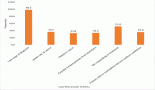
Results: The overall non-compliance rate was 42.4%. The final multivariable model revealed that non-compliance was primarily driven by a convergence of clinical and systemic factors rather than patient demographics. The strongest predictors reflected clinical severity, specifically cancer type [cervical: odds ratio (OR) = 7.43; head and neck: OR = 3.54] and the need for a treatment replan (OR = 5.60). Systemic factors were also significant predictors, including an internal referral source (OR = 1.83) and treatment timing. Specifically, the risk of non-compliance increased for patients undergoing computed tomography simulation in the third quarter (July–September) and for those starting treatment in the fourth quarter (October–December), which are periods associated with regional climatic and socioeconomic pressures.
Conclusion: In this Philippine public cancer center, RT non-compliance is driven by clinical vulnerability and dynamic systemic pressures, not static patient demographics. These findings highlight the need to shift from passive risk assessment to proactive, risk-stratified interventions. Implementing strategies such as patient navigation and support programs, adjusted for predictable seasonal pressures, can mitigate vulnerability, improve treatment adherence and ultimately enhance cancer outcomes in resource-constrained settings.