Background: Time toxicity refers to the considerable time investment required by patients undergoing cancer treatment, including travel, waiting periods and treatment duration. It is increasingly recognised not only as a logistical burden but also as a psychological stressor, significantly affecting patient well-being.
Objectives: This study surveyed oncologists across Pakistan to assess their understanding of time toxicity and its impact on both patients and clinical practice.
Methods: From August to October 2023, we conducted a cross-sectional study targeting a diverse group of cancer care professionals including medical oncologists, clinical hematologists, radiation oncologists and palliative care physicians – across various healthcare centers in Pakistan. An online questionnaire was used to gather insights into their perspectives on time toxicity.
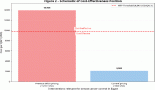
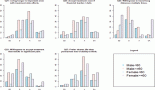
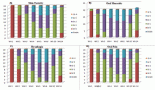
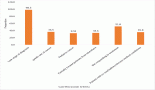
Results: Over 54% of oncologists had a basic understanding of time toxicity, with 83.6% recognising its importance in cancer care. However, 69% noted that patients were poorly informed and often did not consider time burden in decision-making. About 45% of patients spent more than 10 hours per week on care-related activities. Key factors influencing time toxicity included cancer type, stage and logistical challenges. Notably, 85% of oncologists reported modifying treatment plans to reduce this burden. Strategies included offering chemotherapy services closer to patients’ homes, using telemedicine for consultations and proactively managing side effects. The psychological toll of time-consuming schedules was also acknowledged by respondents.
Conclusion: Time toxicity poses a substantial burden in cancer treatment, both practically and psychologically. Enhancing healthcare providers’ awareness, improving access to care and adopting patient-centered approaches can significantly improve patient outcomes and quality of life.