
Supporting oncology professionals through education
The content on this site is intended for healthcare professionals only
The content on this site is intended for healthcare professionals only
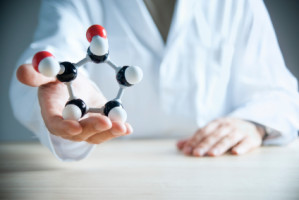
Wistar scientists have combined a promising cancer therapy with a molecule that targets tumours to treat cancer more effectively.
The new approach could be a way to deliver treatment directly to tumours at higher doses, while reducing side effects in healthy tissue.
The research is published in the journal Molecular Cancer Therapeutics.
“An Aurora kinase A (AURKA) inhibitor is viewed as a lethal synthetic molecule in cancer therapy, but the problem is you can’t dose it high enough, because then it starts to spill over and target normal cells, causing toxicity,” said coauthor Joseph Salvino, Ph.D. “By using this cancer-targeting approach, we can direct this molecule, which is already in clinical use, to cancer cells, increasing its exposure in the tumour itself.”
Salvino is professor in the Molecular and Cellular Oncogenesis Programme at the Ellen and Ronald Caplan Cancer Centre, and scientific director of Wistar’s Molecular Screening & Protein Expression Facility.
The new chimaeric molecule takes two existing molecules and attaches them together like LEGO blocks to make what’s called a small molecule drug conjugate.
One half of the conjugate, an Aurora kinase A (AURKA) inhibitor, works by blocking a protein that controls cell division and helps tumours to grow.
While this molecule has shown promise in clinical trials, it’s also caused toxic side effects that limited its use.
The second half is a molecule that binds to a protein called HSP90, which cancer cells produce to help them survive stress.
By targeting HSP90, which is found at high levels in cancer cells, researchers hoped to show that they could concentrate the compound within the tumour, preferentially over healthy tissue.
In a proof-of-concept study, they demonstrated that the new chimaeric molecule successfully binds to both the AURKA and HSP90 proteins.
When researchers tested it in cell samples taken from multiple cancer types, including head and neck, lung, and melanoma, they found that it stopped the cancer cells from dividing and replicating, eventually causing the cells to die.
The researchers then tested the new chimaeric molecule in preclinical animal models.
They found that it concentrated inside the tumours at levels sometimes 10 times higher than when the original AURKA inhibitor was used on its own.
The compound also stayed in the tumour for much longer, and was still active 24 hours after being injected, while the original inhibitor was no longer detectable.
The compound was also well tolerated in preclinical models, with no significant toxicity.
When the researchers combined the new molecule with another cancer drug, called a WEE1 inhibitor, the two together were even more effective in controlling tumour growth.
“When drugs fail in the clinic, 50% of the time it’s because of poor exposures in the tumour, due to pharmacokinetic problems,” or the body’s ability to absorb or interact with a drug, Salvino explained.
“Our approach will take an existing compound and improve its pharmacokinetic properties, enhancing its exposures in the tumour.”
In addition to the cancers tested in the initial study, the new compound should have broad application to many other types of cancer, he added.
Next, researchers plan to apply their approach to different molecules and types of cancer.
They also want to develop the new chimaeric molecule into a formulation that can be given orally.
Source: The Wistar Institute
The World Cancer Declaration recognises that to make major reductions in premature deaths, innovative education and training opportunities for healthcare workers in all disciplines of cancer control need to improve significantly.
ecancer plays a critical part in improving access to education for medical professionals.
Every day we help doctors, nurses, patients and their advocates to further their knowledge and improve the quality of care. Please make a donation to support our ongoing work.
Thank you for your support.