
Supporting oncology professionals through education
The content on this site is intended for healthcare professionals only
The content on this site is intended for healthcare professionals only
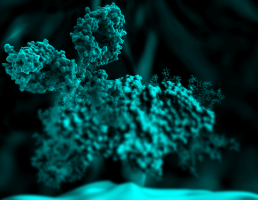
Antibody treatments for cancer and other diseases are typically delivered intravenously, because of the large volumes that are needed per dose.
This means the patient has to go to a hospital for every treatment, where they may spend hours receiving the infusion.
MIT engineers have now taken a major step toward reformulating antibodies so that they can be injected using a standard syringe.
The researchers found a way to create solid particles of highly concentrated antibodies, suspended in a solution.
These particles carry enough antibodies that only about 2 millilitres of solution would be needed per dose.
This advance could make it much easier for patients to receive antibody treatments, and could make treatment more accessible for patients who have difficulty coming into a hospital, including older people.
“As the global population ages, making the treatment process more convenient and accessible for those populations is something that needs to be addressed,” says Talia Zheng, an MIT graduate student who is the lead author of the new study.
Patrick Doyle, the Robert T.Haslam Professor of Chemical Engineering, is the senior author of the open-access paper, which appears in Advanced Materials.
MIT graduate student Lucas Attia and Janet Teng ’25 are also authors of the study.
Highly concentrated antibodies
Therapeutic antibody drugs such as rituximab, which is used to treat some cancers, consist of antibodies suspended in a water-based solution.
In addition to cancers, antibodies are also used to treat infectious diseases, as well as autoimmune disorders such as rheumatoid arthritis, inflammatory bowel disease, and multiple sclerosis.
Because the antibody solutions are formulated at low concentrations (10 to 30 milligrammes of antibody per millilitre of solution), patients need to be given at least 100 millilitres per dose, which is much too large to be injected using a standard syringe.
To decrease this volume to the point where it could be injected, the antibody concentration would need to be at least 300 milligrammes per millilitre, but that would make the solution much too thick to be injected.
“You can’t concentrate existing formulations to these concentrations,” Doyle says.
“They’ll be very viscous and will exceed the force threshold of what you can inject into a patient.”
In 2023, Doyle’s lab developed a way to generated highly concentrated antibody formulations by encapsulating them into hydrogel particles.
However, that process requires centrifugation, a step that would be difficult to scale up for manufacturing.
In their new study, the researchers took a different approach that allows them to create droplets suspended in an emulsion, similar to oil and vinegar.
In this case, droplets containing antibodies dissolved in a watery solution are suspended in an organic solvent called pentanol.
These droplets can then be dehydrated, leaving behind highly concentrated solid antibodies — about 360 milligrammes of antibody per millilitre of solution.
These particles also include a small amount of polyethylene glycol (PEG), a polymer that helps stabilise the particles.
Once these solid particles form, the organic solvent surrounding them is removed and replaced with an aqueous solution (water containing dissolved salts and small amount of stabilising polymer), similar to the solution now used to infuse therapeutic antibodies.
This assembly process can be done rapidly using a microfluidic setup and does not require centrifugation, which should allow it to be scaled up much more easily using emulsification devices compliant with GMP (good manufacturing practice) regulations.
“Our first approach was a bit brute force, and when we were developing this new approach, we said to it’s got to be simple if it’s going to be better and scalable,” Doyle says.
Injectable particles
The researchers showed that they could control the size of the particles — from about 60 to 200 microns in diameter — by changing the flow rate of the solutions that make up the droplets.
Using particles 100 microns in diameter, they tested the injectability of the solution using a mechanical force tester.
Those studies showed that the force needed to push the plunger of a syringe containing the particle solution was less than 20 newtons.
“That is less than half of the maximum acceptable force that people usually try to aim for, so it’s very injectable,” Zheng says.
Using a 2-millilitre syringe, a typical size for subcutaneous injections, more than 700 milligrammes of the target antibody could be given at once — enough for most therapeutic applications.
The researchers also showed that their formulations remained stable under refrigeration for at least four months.
The researchers now plan to test their antibody particles for therapeutic applications in animal models.
They are also working on scaling up the manufacturing process, so they can make enough for large-scale testing.
Article: High-Concentration Antibody Formulation via Solvent-Based Dehydration
We are an independent charity and are not backed by a large company or society. We raise every penny ourselves to improve the standards of cancer care through education. You can help us continue our work to address inequalities in cancer care by making a donation.
Any donation, however small, contributes directly towards the costs of creating and sharing free oncology education.
Together we can get better outcomes for patients by tackling global inequalities in access to the results of cancer research.
Thank you for your support.